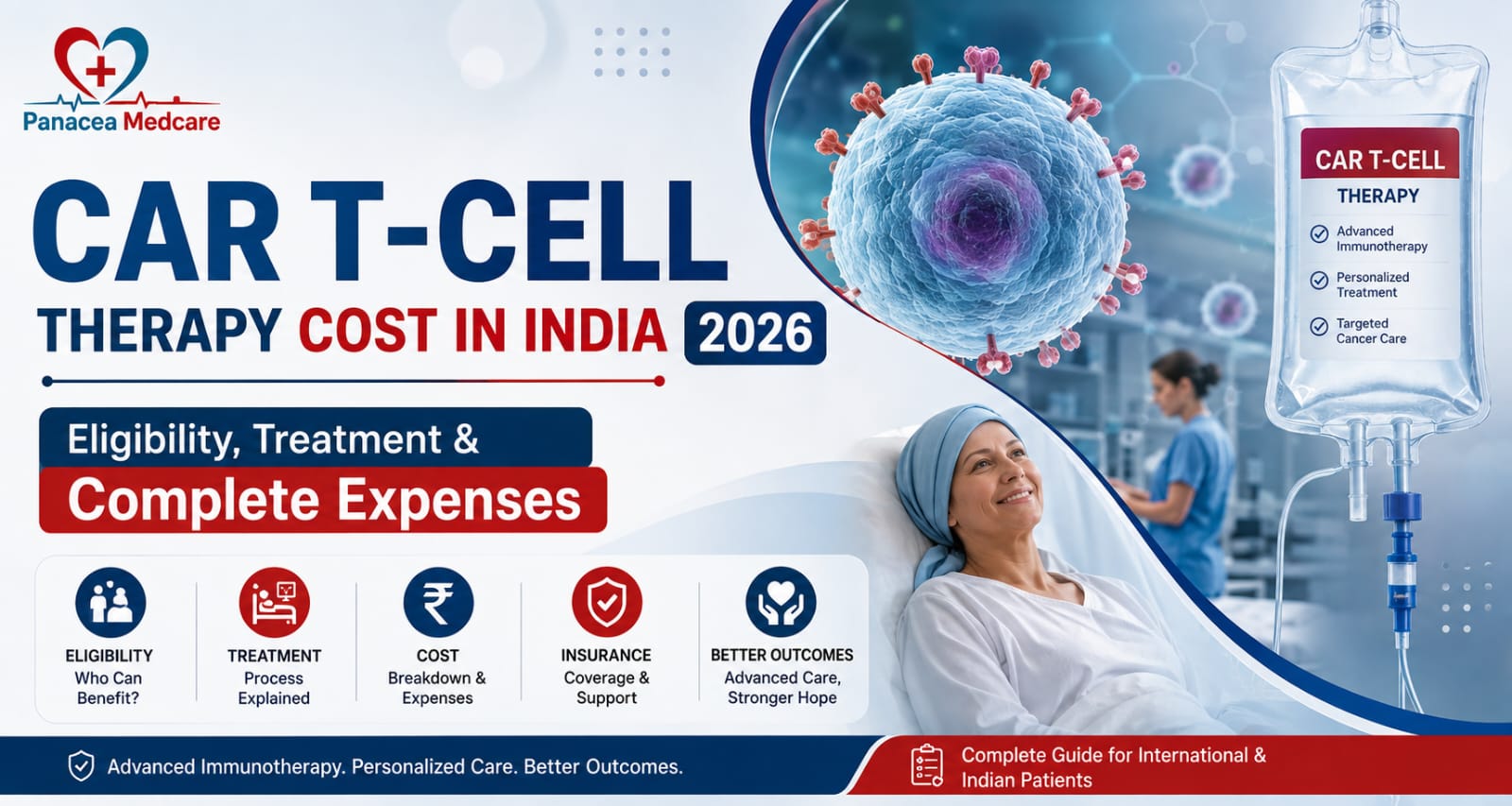
CAR T-Cell Therapy Cost in India 2026: Eligibility, Treatment & Complete Expenses
For patients with some blood cancers that no longer respond to their usual therapies or have already come back, CAR T-cell therapy has developed a high-tech therapy that was very hard to obtain in the past due to its extraordinarily high cost. With the locally developed CAR T-cell treatments, India has altered the balance of power considerably.
In 2026, the CAR T-cell therapy cost in India is typically around 30-40 Lakh to treat an indigenous CAR T approach, though it all depends on the CAR T product, hospital, pre-treatment assessment, hospitalization, ICU, and follow-up costs. The Department of Biotechnology in India estimates the cost of indigenous CAR T therapy at around 30-40 lakh, whereas imported therapies in India cost around 3-4 crore.
Nevertheless, not all cancer patients can be involved with CAR T-cell therapy. Eligibility depends on the type of blood cancer, prior therapies, overall condition, general health, and the specialist’s evaluation.
When international patients are considering advanced cancer treatment in India, it is essential to understand eligibility and the total CAR T-cell therapy cost in India before traveling.
What Is CAR T-Cell Therapy?
CAR T-cell therapy is a cellular form of immunotherapy that involves collecting and genetically modifying T cells, a type of immune cell, in a specialized laboratory.
Such transfigured cells are designed to identify a target on cancer cells. They are then multiplied and returned to the patient to recognize and target specific cancer cells.
In India, most approved CAR T therapies target the CD19 protein, which is expressed in some B-cell cancers. Approved products in India are used to treat relapsed or refractory B-cell lymphoma and leukemia.
Unlike standard chemotherapy, which uses cycles, CAR T treatment involves genetically modifying customized cellular therapy using one’s own immune cells.
What Is the CAR T-cell therapy cost in India in 2026?
The CAR T-cell therapy cost in India is substantially lower than the cost historically associated with imported CAR T products, but it remains an expensive cancer treatment.
For India’s indigenous CAR T treatment, patients should generally expect approximately:
| CAR T Treatment Component | Approximate Expense |
| CAR T-cell product/manufacturing | ₹25–35 lakh |
| Pre-treatment investigations | ₹80,000–₹1.5 lakh |
| Lymphodepleting chemotherapy | ₹40,000–₹80,000 |
| Hospitalisation after infusion | ₹2–6 lakh |
| Specialist/monitoring charges | ₹50,000–₹1.5 lakh |
| Management of complications | Additional if required |
| Potential overall treatment budget | Approximately ₹30–40 lakh+ |
These figures are indicative, not fixed quotations. Recent 2026 estimates place the manufacturing component of NexCAR19 around ₹25–35 lakh, with investigations, lymphodepletion, hospitalization, and complication management adding to the complete treatment expense.
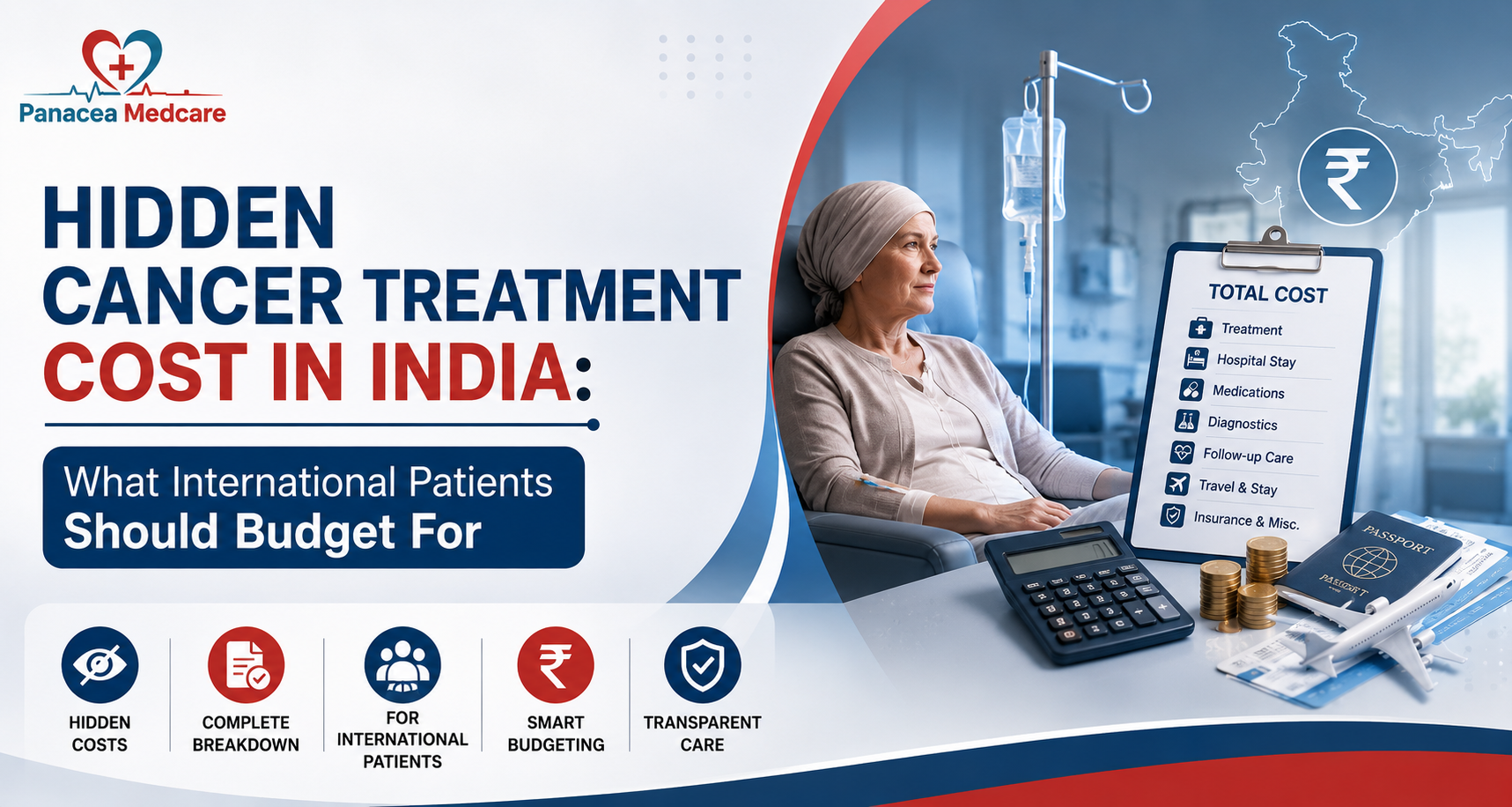
For international patients, accommodation, flights, visa expenses, local transportation, and an extended stay in India must also be considered.
Why Is CAR T-Cell Therapy So Expensive?
The CAR T-cell treatment cost in India makes more sense when patients understand that CAR T is not an off-the-shelf medicine administered directly from a vial.
It is a highly specialized treatment involving several complex stages.
Personalized Cell Manufacturing
T cells must be harvested from an individual patient and delivered to a dedicated production facility. This involves genetically engineering the cells, producing larger numbers, testing them, and preparing them for the patient.
Advanced Laboratory Infrastructure
T cells must be harvested from an individual patient and delivered to a dedicated production facility. This involves genetically engineering the cells, producing larger numbers, testing them, and preparing them for that patient.
Extensive Pre-Treatment Evaluation
Patients need thorough investigations to determine whether CAR T therapy is medically suitable and whether they are fit to receive treatment.
Specialized Hospital Care
CAR T therapy requires expert, well-trained hematology-oncology personnel and centers that can identify and manage complications associated with the treatment, which can be life-threatening. One of the biggest factors that has made CAR T therapy so expensive is manufacturing complexity.
Who Is Eligible for CAR T-Cell Therapy in India?
CAR T therapy is not a general treatment for every cancer and is not normally used simply because a patient wants an alternative to chemotherapy.
Current CD19-directed CAR T therapies in India primarily address selected B-cell blood cancers.
Eligibility can include adults with certain:
- Relapsed or refractory B-cell acute lymphoblastic leukemia
- Relapsed or refractory large B-cell lymphoma
- Other eligible B-cell lymphomas depending on the approved product and clinical indication
NexCAR19 is approved for adults with relapsed or refractory B-cell acute lymphoblastic leukemia and large B-cell lymphoma, while Qartemi is approved for adult relapsed or refractory large B-cell lymphoma.
What Does Relapsed or Refractory Mean?
As the name suggests, relapsed cancer is cancer that recurred when it had already reacted to treatment. Refractory cancer implies that the cancer did not respond well to treatment or ceased all reaction.
CAR T therapy is mostly regarded as a therapy used after other treatment methods have been used, not as a first-line therapy.
Who May Not Be Suitable for CAR T Therapy?
Having an eligible cancer diagnosis does not automatically mean a patient can receive CAR T treatment.
Doctors may need to evaluate:
- Current disease status
- Previous cancer treatments
- Overall physical condition
- Heart function
- Kidney and liver function
- Active infections
- Blood counts
- Neurological history
- Ability to tolerate treatment
- Availability of an appropriate CAR T product
An experienced hematologist or hemato-oncologist must make the final eligibility decision after reviewing the patient’s complete medical history.
Complete CAR T-Cell Therapy Process in India
Understanding the treatment pathway also helps explain the CAR T-cell therapy cost in India.
1. Medical Evaluation
The specialist evaluates the patient’s diagnosis and pathology, previous treatment history and response, imaging, blood tests, and overall health. The specialist will decide whether CAR T therapy is medically appropriate.
2. T-Cell Collection
If the patient qualifies, T cells are isolated from the patient’s blood in a process called leukapheresis.
Specialized equipment filters the blood, isolates the necessary immune cells, and returns the remaining blood components to the patient.
3. CAR T-Cell Manufacturing
Collected T cells are also sent to a special lab. They are genetically engineered to express a chimeric antigen receptor specific to CD19 on cancer cells.
The developed cells are further expanded to generate enough for treatment.
Native CAR T production in India has considerably lowered costs compared with bringing personalized cell therapies abroad.
4. Treatment During the Manufacturing Period
Production of CAR T is time-consuming. Physicians can prescribe bridging therapy while the personalized cells are being prepared, depending on the status of the patient’s disease. This patient-oriented therapy can affect the total CAR T Therapy Cost in India.
5. Lymphodepleting Chemotherapy
Lymphodepleting chemotherapy is usually given as a short course of treatment before CAR T is infused.
This depletes some preexisting immune cells and helps create an environment in which the infused CAR T cells can proliferate and function.
6. CAR T-Cell Infusion
The infusion is then returned to the bloodstream once the cells are ready and the patient is medically prepared. The infusion itself is only one part of the treatment process.
7. Close Monitoring
Patients need close attention after the infusion due to the possible emergence of significant side effects. Monitoring costs and the need for hospitalization add to the overall cost of treatment.
8. Follow-Up
Follow-up by specialists, blood tests, disease-response measurements, and post-discharge monitoring are still necessary.
What Additional Costs Can Increase CAR T Therapy Expenses?
A quoted CAR T-cell therapy cost in India may not include every possible medical expense. International patients should specifically ask about the following.
Pre-Treatment Testing
Bone-marrow studies, flow cytometry examinations, infection screening, heart test, imaging, and organ-function test, and other tests may be added to the original budget.
Bridging Therapy
Other patients undergo treatment as their CAR T cells are being produced. It all depends on the treatment required.
Hospital Stay
Infusion may be followed by hospitalization, which can cost several lakh rupees depending on the hospital, room type, monitoring needs, and length of stay.
ICU Care
When patients acquire severe complications, high dependency or intensive care might be needed. This can make the overall CAR T-cell therapy cost in India enormous.
Medicines for Complications
Other drugs may be needed to manage side effects or infections.
Follow-Up Tests
Blood tests, imaging, bone marrow studies, and specialist consultations may be needed to assess response to treatment.
What Are the Major Risks of CAR T-Cell Therapy?
CAR T therapy can produce significant side effects and requires treatment at a centre equipped to identify and manage them.
Cytokine Release Syndrome
A critical complication is cytokine release syndrome (CRS), an inflammatory response resulting from an intense immune response.
Symptoms may include fever, low blood pressure, difficulty breathing, fatigue, and other systemic effects. Severe cases may require extensive monitoring and treatment.
Neurological Effects
Some products may also lead to neurological complications such as confusion, difficulties in speaking, tremors, seizures, or changes of consciousness due to CAR T therapies.
Interestingly, initial NexCAR19 clinical data showed only a relatively low rate of severe CRS and no neurologic toxicity in the first 53 participants in the study, but that does not imply that CAR T therapy is safe.
Infection and Low Blood Counts
They can also cause low blood cell counts and a predisposition to infection after treatment.
The risk profile of the patient and CAR T products varies; hence, individual counseling by the treating team is crucial.
NexCAR19: India’s Indigenous CAR T-Cell Therapy
One of the key advances in the Cost of CAR T-cell therapy in India has been the enactment of NexCAR19.
Developed in collaboration with IIT Bombay, Tata Memorial Center, and ImmunoACT, NexCAR19 was India’s first indigenous CAR T-cell therapy. It was introduced in April 2024. The treatment targets CD19 and is aimed at a few relapsed or refractory B-cell malignancies.
It has had the largest economic and clinical impact. According to the Department of Biotechnology, indigenous CAR T therapy has reduced the price to about ₹30-40 lakh, as compared to about 3-4 crores for the imported therapy.
This does not make CAR T cheap, but it is a significant savings in the cost of advanced cellular therapy.
CAR T Therapy in India vs Overseas: Cost Difference
India’s development of indigenous CAR T therapy has significantly changed the international cost comparison.
| Treatment Market | Approximate Cost Perspective |
| India – Indigenous CAR T | Around ₹30–40 lakh+ |
| Imported/Overseas CAR T | Can run into several crore rupees |
| Additional medical/travel expenses | Depend on individual patient |
The National Cancer Institute previously noted an expected NexCAR19 price of around US$50,000 compared with approximately US$400,000 for a CAR T infusion in the United States.
For international patients, however, comparing only the CAR T product price is misleading. Travel, accommodation, pre-treatment evaluation, hospitalization, complication management, and follow-up must all be considered.
How Long Does CAR T-Cell Therapy Take?
A single hospital visit is not enough to complete CAR T treatment. Assessment, cell collection, manufacturing, pre-infusion treatment, CAR T infusion, monitoring, and follow-up should be performed for the patients.
Indian production schedules may currently fluctuate. According to a recent report on NexCAR19, the median time from needle-to-needle was about 29 days, referring to the time between cell collection and CAR T transfusion.
International patients should not set a strict return date before their treating team provides a realistic treatment and follow-up schedule.
What Should International Patients Budget Beyond CAR T Treatment?
The CAR T Cell Therapy Cost for International Patients in India includes more than medical treatment.
Patients and accompanying family members should also budget for:
- International flights
- Medical visa expenses
- Accommodation
- Attendant expenses
- Local transportation
- Food and daily living
- Extended stay if medically required
- Additional investigations
- Follow-up appointments
- Changes to return flights
Because CAR T therapy can require several weeks of treatment and monitoring, accommodation and travel planning should happen only after the treating hospital provides an expected timeline.
How Can International Patients Get an Accurate CAR T Cost Estimate?
Generic online pricing cannot determine whether a patient is eligible or what their actual treatment will cost.
Patients should first provide:
- Pathology reports
- Bone marrow reports where applicable
- Flow cytometry/immunophenotyping reports
- PET-CT or other imaging
- Previous chemotherapy records
- Stem cell transplant history, if applicable
- Current blood investigations
- Details of previous targeted therapies
- Current medications
- Treating oncologist’s reports
A CAR T specialist or hematologist-oncologist can then determine whether the disease and treatment history fit an approved or otherwise appropriate treatment pathway.
Only after this review should patients obtain a personalized CAR T Cell Therapy Cost estimate in India.
Get a Personalized CAR T Treatment Plan with Panacea Medcare
India has emerged as a key destination for treating blood cancer, and the indigenization of cellular therapies has drastically reduced the CAR T-cell therapy cost in India. Nevertheless, CAR T is a highly targeted treatment that must be used with great caution, with careful patient selection, tailored cell production, specialized personnel, modern hospital facilities, and strict follow-ups.
To international patients, the flight bookings or the lowest package should not be the first step. It should be determining whether CAR T therapy is suitable for the patient’s cancer.
Panacea Medcare helps foreign patients find highly qualified specialists, review appropriate hospitals, understand eligibility criteria and expected costs, and arrange transportation, accommodation, hospital care, and follow-ups.
Share your medical reports with Panacea Medcare today to receive a specialist evaluation and personalized CAR T-cell therapy cost estimate before planning your treatment journey to India.
Frequently Asked Questions
1. How much does CAR T-cell therapy cost in India in 2026?
The CAR T-cell therapy cost in India for indigenous treatment is generally around ₹30–40 lakh, although the complete expense can increase with investigations, hospitalisation, bridging therapy, complications, ICU care, and follow-up.
2. Which cancers can be treated with CAR T-cell therapy in India?
Currently approved CD19-directed CAR T therapies in India primarily target selected relapsed or refractory B-cell blood cancers, including certain B-cell leukemias and lymphomas. Eligibility requires specialist evaluation.
3. Is CAR T-cell therapy cheaper in India than abroad?
India’s indigenous CAR T therapy is substantially less expensive than many imported or overseas CAR T products. Government sources place indigenous therapy around ₹30–40 lakh compared with ₹3–4 crore for imported treatment.
4. Is CAR T-cell therapy a replacement for chemotherapy?
No. CAR T therapy is not a universal replacement for chemotherapy. It is generally used for specific eligible cancers, particularly when disease has relapsed or stopped responding to established treatments.
5. Can international patients receive CAR T therapy in India?
Potentially, yes, provided the patient’s cancer type, previous treatment history, overall health, and other eligibility criteria make CAR T therapy appropriate. A specialist should review medical records before travel.