
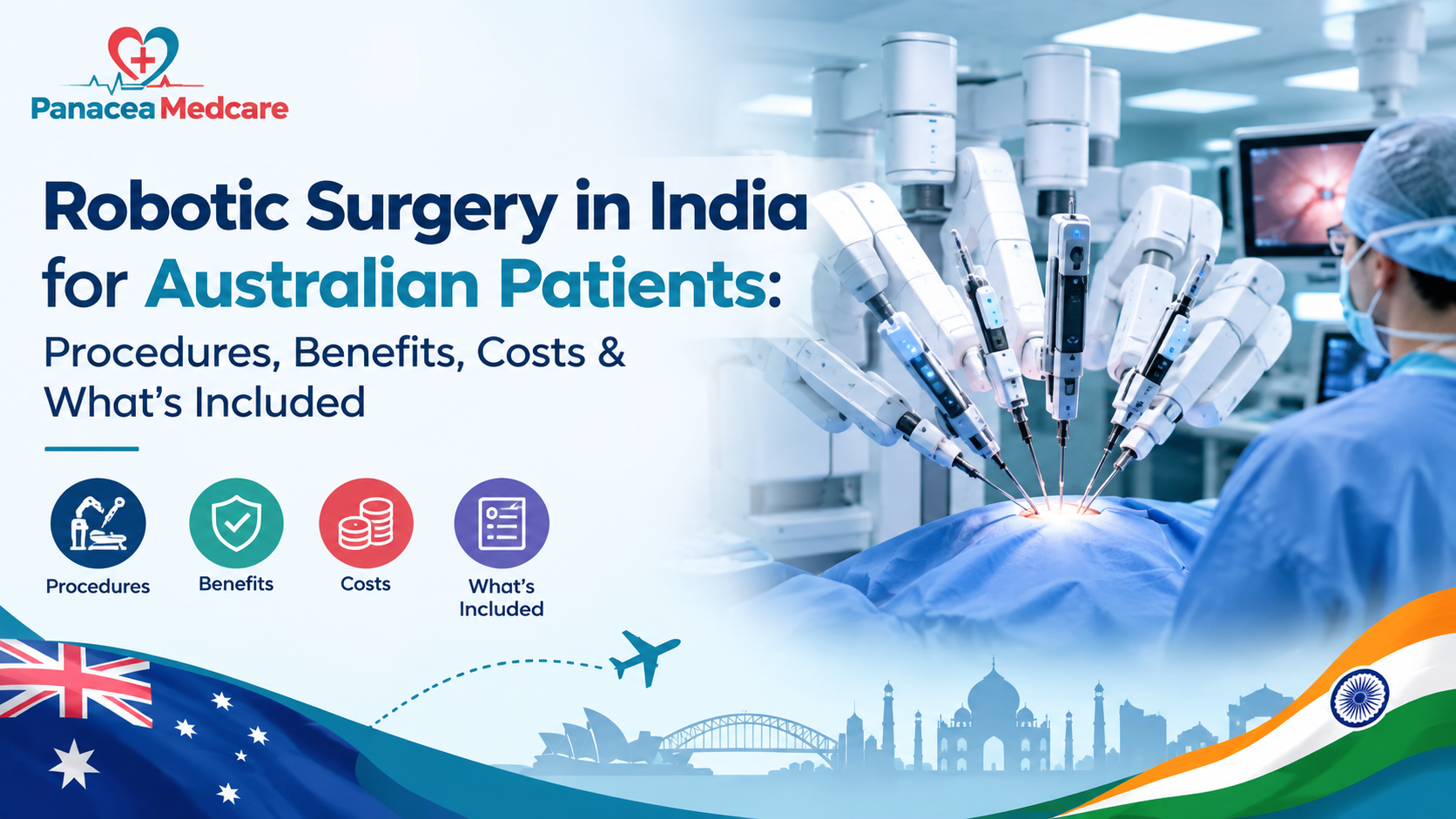
Robotic Surgery in India for Australian Patients: Procedures, Benefits, Costs & What’s Included
Most Australians thinking about surgery overseas don’t just look at the price. They want to know whether the surgeon has done their procedure many times, which robotic system the hospital uses, how long they’ll be out of action, what the hospital quote really covers, and what happens once they get back home.
Robotic Surgery in India for Australian Patients have become a much more popular option. Big Indian hospitals now offer robot-assisted operations for urology, cancer, gynecology, gut surgery, heart surgery, and some joint work. Systems like the da Vinci platform are already running at well-known centers.
Costs can be lower than private care in some places, but robotic surgery isn’t automatically the right choice for everyone. The actual procedure, the diagnosis, how experienced the surgeon is, and whether you’re medically suitable matter a lot more than the fancy tech.
This guide covers robotic surgery costs in India, the procedures you can get, the possible upsides, what usually sits inside a treatment quote, recovery points, and what Australian patients should double-check before booking a flight.
What Is Robotic Surgery and How Does It Work?
Robotic surgery is a minimally invasive approach in which a trained surgeon uses a robotic platform to perform the operation.
The robot doesn’t take over. The surgeon stays in charge the whole time.
With systems like da Vinci, the surgeon sits at a console and controls instruments that go in through small cuts. You get a clear magnified 3D view and instruments that can move with a lot of precision.
That can help the surgeon work carefully in tight spots inside the body, depending on the operation.
It’s not better than open or normal keyhole surgery in every case. Apollo itself says robot-assisted surgery isn’t suitable for all patients, and people should talk through the risks, benefits and other options with their doctor.
Why Are Australian Patients Considering Robotic Surgery in India?
People travel overseas for healthcare for different reasons. Smartraveller notes that saving money and accessing certain treatments are common reasons. Heart surgery, cancer treatment, fertility care, dentistry and other specialist work often come up.
For robotic surgery, India can give access to hospitals that already run advanced robotic systems across several specialties.
Some of the reasons people look at India are:
- Access to experienced robotic surgeons
- Advanced robotic surgical platforms
- Treatment across multiple specialties
- Potentially lower self-funded treatment costs
- Ability to get specialist opinions before travelling
- International patient departments at major hospitals
- Coordinated treatment and recovery planning
Even so, Australian patients still need to weigh whether the surgery is right for them medically and consider the full cost, not just pick India because an advertised price looks cheaper.
Which Robotic Surgeries Are Available in India?
One of the benefits of robotic surgery in India is that the technology isn’t limited to one specialty anymore. Indian hospital programs now use robotic platforms for urology, gynecology, gut surgery, cancer work, heart and chest surgery, weight-loss surgery, and other selected areas.
Robotic Urological Surgery
Urology is one of the areas where robot-assisted surgery has been around the longest.
Procedures can include:
- Robotic radical prostatectomy
- Robotic partial nephrectomy
- Robotic radical nephrectomy in selected cases
- Robotic cystectomy
- Procedures for selected urinary tract conditions
For men with early prostate cancer, robotic prostatectomy is one of the options Australian patients often look at when they’re comparing treatment options overseas.
Robotic Cancer Surgery
Robotic tech can be used for certain cancers where a less invasive approach makes sense medically.
Depending on the cancer and the hospital’s experience, this can cover selected:
- Prostate cancers
- Kidney cancers
- Bladder cancers
- Colorectal cancers
- Gynecological cancers
- Gastric cancers
- Other appropriately selected tumors
Whether it’s suitable depends on the type of cancer, how far it’s gone, where it is, any previous treatment, and what the surgeon thinks.
Robotic Gynecological Surgery
Robotic systems are also used for some gynaecological conditions.
Procedures can include surgery for:
- Uterine and cervical cancers
- Multiple fibroids
- Endometriosis
- Uterine prolapse
- Ovarian cysts
- Other complex gynecological conditions
Apollo lists these as conditions treated in its robotic program. (Apollo Hospitals)
Robotic Gastrointestinal Surgery
Some colorectal, stomach and other gut operations can also be done with robotic help.
Working through smaller cuts can be useful in tricky spots, but the right method still depends on the individual condition.
Robotic Cardiac Surgery
Robotic heart surgery is more specialised and only available for certain patients and procedures.
Indian centres use robotic systems for some valve and coronary work. In February 2026, Kauvery Hospital in Chennai started a robotic-assisted beating-heart CABG program using a fourth-generation da Vinci system for selected coronary artery disease patients. (Kauvery Hospital)
Robotic Joint Replacement
Orthopaedic robotic systems are different from the soft-tissue ones like da Vinci.
Robotic help can be used for procedures such as knee replacement to plan the bone cuts and implant position more carefully.
This matters for Australian patients looking into robotic knee replacement in India, but it still depends on the joint condition and the surgeon’s assessment.
What Are the Potential Benefits of Robotic Surgery?
Robotic surgery is mainly meant to help surgeons do certain operations through smaller cuts with better vision and more control over the instruments.
Depending on the procedure and the patient, possible upsides can include:
Smaller Incisions
A lot of robot-assisted operations can be done through several small cuts instead of one big open one.
Reduced Blood Loss
For some procedures, the minimally invasive robotic approach may mean less blood loss during surgery compared with traditional open surgery.
Shorter Hospital Stay
Some patients may get to go home sooner after an uncomplicated minimally invasive procedure.
Faster Initial Recovery
Smaller cuts and less trauma to the tissue may help some people get back to normal daily life a bit quicker.
Greater Surgical Precision
The robotic instruments give better control and a clearer view, which can help when the surgeon is working in tight spaces.
Major Indian robotic programs talk about benefits such as smaller cuts, less blood loss and potentially faster recovery. (Apollo Hospitals)
These are possible benefits, not guarantees. How much difference the robot makes varies a lot depending on the procedure and the person.
How Much Does Robotic Surgery Cost in India?
There’s no single Robotic Surgery Cost in India because “robotic surgery” is just a way of operating, not one fixed procedure.
A robotic prostatectomy, robotic hysterectomy, robotic heart procedure and robotic joint replacement all involve different surgeons, different equipment, different consumables, different implants and different hospital needs.
The final cost can depend on:
- Type and complexity of surgery
- Robotic platform used
- Robotic consumables
- Surgeon’s fees
- Anaesthesia
- Hospital selected
- Room category
- Length of hospitalization
- ICU requirements
- Implant or prosthesis, where required
- Diagnostic investigations
- Patient’s existing medical conditions
- Unexpected complications
Apollo Delhi notes that robotic procedures in its program can cost around ₹1.5 lakh more than comparable conventional surgery on average, but that’s not a fixed difference across India or every procedure. (Apollo Hospitals)
For an Australian patient, the better question isn’t simply:
“How much does robotic surgery cost in India?”
It’s:
“What will my exact robotic procedure cost after a specialist has looked at my case?”
Robotic Surgery Cost in India vs Australia: What Should Patients Compare?
A straight India-versus-Australia price comparison can be misleading unless you’re looking at the same procedure and the same things included.
Australia has public Medicare and private healthcare. What an Australian patient actually pays can vary a lot depending on whether the treatment is available publicly, through private insurance, or as a fully self-funded private job.
When someone travels to India specifically for planned surgery, the numbers change again.
The Australian Government is clear that Medicare doesn’t cover treatment overseas. It also warns that basic travel insurance rarely covers medical tourism, so people may need specialised cover for the procedure itself, any complications afterwards, and medical evacuation if needed. (Smartraveller)
Australian patients should therefore compare:
Australian out-of-pocket treatment cost
against
Indian surgery + flights + accommodation + insurance + companion + recovery + follow-up + contingency budget
rather than just looking at two advertised surgery prices.
What Is Usually Included in a Robotic Surgery Package in India?
This is one of the most important things an international patient should ask.
A hospital estimate may include:
- Surgeon fees
- Assistant surgeon fees where applicable
- Anaesthetist charges
- Operating theatre charges
- Robotic system/technology charges
- Standard robotic consumables
- Hospital room for the quoted duration
- Routine nursing
- Standard medicines during admission
- Routine laboratory investigations
- Procedure-related hospital services
Packages vary a lot from hospital to hospital.
Patients should ask for a written itemised estimate rather than assuming everything is covered.
What May NOT Be Included in the Quoted Cost?
The lowest advertised Robotic Surgery Cost for International Patients may not be the final amount you end up paying.
Extra costs can include:
Pre-Surgery Investigations
You may need blood tests, scans, biopsy review, heart clearance or other specialist checks before the operation.
Implants
For robotic joint replacement, the implant itself can make up a big part of the cost.
Extended Hospital Stay
If recovery takes longer than expected, extra room, nursing and medical charges can kick in.
ICU Care
Unexpected intensive-care needs can push the hospital bill up a lot.
Treatment of Complications
Extra surgery, medicines, scans or more hospital time because of complications may sit outside the original package.
Rehabilitation
Physio or rehab may be needed after joint, heart and some other procedures.
Travel Expenses
Flights, accommodation, meals, local transport and costs for a companion usually need to be budgeted separately.
Australian government advice specifically says people should think about the extra money they might need if complications happen after overseas treatment. (Smartraveller)
How Long Should Australian Patients Stay in India?
How long you need to stay depends on the procedure.
Someone having robotic prostate surgery may have different travel limits from someone having robotic knee replacement or heart surgery.
The full stay generally needs to cover:
Preoperative assessment → surgery → hospital stay → early recovery → post-op check → medical clearance to fly
Don’t lock in a rigid return flight based only on the expected discharge date.
Long-haul flying soon after major surgery can carry extra risks, including blood clots. The treating surgeon should decide when you’re medically fit to fly.
What Should Australians Check Before Choosing a Robotic Surgeon in India?
The robotic system itself shouldn’t be the main reason you pick a hospital.
A sophisticated robot can’t make up for a surgeon who doesn’t have much experience with the procedure.
Patients should ask:
- Is the surgeon properly qualified for this procedure?
- How much experience do they have with this particular robotic operation?
- Which robotic platform will be used?
- Why is robotic surgery recommended for my case?
- Could keyhole or open surgery be just as suitable?
- What are the complication rates for this procedure?
- Which hospital will do the surgery?
- What intensive-care facilities are available if needed?
- Who manages complications?
- How will follow-up work after I get back to Australia?
Smartraveller advice also tells medical tourists to check the destination, hospital, surgeon, qualifications, accreditation, risks and follow-up arrangements before committing. (Smartraveller)
Is Robotic Surgery Better Than Traditional Surgery?
Not necessarily.
This point matters because “robotic” can easily become a marketing word.
The best approach depends on the patient’s condition, anatomy, diagnosis, previous operations, disease stage and the surgeon’s experience.
For one person, robotic surgery may give a real advantage with smaller cuts.
For another, normal keyhole surgery may do the job well without the extra robotic cost.
And in some complex cases, open surgery may still be the safest or most suitable option.
The decision should therefore be:
Which surgical approach is medically right for me?
—not—
Which technology sounds the most advanced?
Medical Tourism and Insurance: What Australians Need to Know
Australian patients should sort out insurance before they pay for any overseas surgery.
Smartraveller’s August 2026 guidance is clear that Medicare doesn’t cover Australians overseas and basic travel insurance rarely covers medical tourism. People are advised to check specifically for cover of post-op care, complications and medical evacuation. (Smartraveller)
Some Australian private insurers may have arrangements with overseas hospitals, but patients should contact their insurer directly and confirm exactly what is and isn’t covered.
This matters a lot because complications after you get home can create costs that were never part of the original Indian hospital quote.
How Panacea Medcare Helps Australian Patients Planning Robotic Surgery in India
Planning Robotic Surgery in India for Australian Patients involves a lot more than just finding a hospital that has a robot.
Panacea Medcare helps coordinate the whole medical journey so patients can understand their options before they travel.
Medical Report Review
Australian patients can send medical reports, scans, pathology results and previous treatment details before they travel.
The case can then be coordinated with an appropriate specialist for review.
Robotic Surgeon and Hospital Selection
Panacea Medcare helps match specialists and hospitals to the actual procedure needed, rather than just picking a place because it advertises robotic technology.
Robotic vs Conventional Surgery Opinion
Where it makes sense, the specialist can look at whether robotic surgery is suitable or whether another approach should be considered.
Personalized Treatment Estimate
Instead of relying on an online average, patients can get a quote based on their specific procedure, covering the expected hospital and surgical costs.
This makes it easier to understand the realistic Robotic Surgery Cost in India before booking travel.
Medical Visa and Travel Coordination
Panacea Medcare helps international patients with medical travel requirements, airport pickup, accommodation and local transport.
Hospital Admission Assistance
The team can coordinate appointments, admission and communication between the patient, hospital and medical team.
Recovery and Follow-Up Coordination
After surgery, Panacea Medcare can help with post-op appointments and follow-up once the patient is back home.
Clinical decisions, of course, stay with the treating doctors.
Frequently Asked Questions
1. Is robotic surgery available in India for Australian patients?
Yes. Indian hospitals offer robot-assisted procedures across specialties including urology, oncology, gynecology, gastrointestinal surgery, cardiothoracic surgery and selected orthopaedic procedures. Whether you’re eligible depends on the diagnosis and specialist assessment. (Apollo Hospitals)
2. Is robotic surgery in India cheaper than Australia?
It can be less expensive in some self-funded situations, but there’s no single comparison that works for everyone. Australian patients should compare their actual out-of-pocket cost in Australia against the full cost in India, including surgery, travel, accommodation, insurance, recovery and a contingency buffer.
3. What does a robotic surgery package in India include?
Depending on the hospital, a quote may cover the surgeon, anaesthesia, operating theatre, robotic technology, standard consumables, hospital room and routine inpatient care. Patients should ask for an itemised quotation because implants, complications, ICU care and longer stays may sit outside the package.
4. Does Medicare cover robotic surgery performed in India?
No. Smartraveller guidance states that Medicare does not cover Australians for medical treatment overseas. Patients should also check whether their private health and travel insurance covers planned overseas treatment and any related complications. (Smartraveller)
5. How can I get a robotic surgery cost estimate before travelling from Australia?
Patients can share their diagnosis, imaging, pathology reports and previous medical records for specialist review. Panacea Medcare can coordinate the right surgeon and hospital and help get a personalised treatment plan and indicative cost estimate before travel.
Plan Robotic Surgery in India with Panacea Medcare
Choosing Robotic Surgery in India for Australian Patients should never start with the cheapest online package. It should start with one question: is robotic surgery actually the right approach for your condition?
Once that’s clear, patients can compare the surgeon, hospital, robotic technology, expected recovery, total Robotic Surgery Cost in India, travel requirements and the post-op plan.
Panacea Medcare helps Australian patients coordinate the whole journey—from medical report review and specialist selection to hospital comparison, personalised cost estimates, medical travel, accommodation, admission help and follow-up.
Thinking about robotic surgery in India? Share your medical reports with Panacea Medcare so an appropriate specialist can review your case and you can get a clear idea of the expected treatment cost before you leave Australia.