Hidden Cancer Treatment Cost in India: What International Patients Should Budget For
India may provide similar cancer treatment at a relatively low price compared with many healthcare systems, but the initial hospital payment does not necessarily cover the patient’s total financial needs. The Cancer Treatment Cost in India may cover diagnostics, medicines, supportive care, repeat scans, accommodation, local traveling, visa fees and the untold extensions to treatment, in the case of international patients.
The estimates of full cancer treatment in India in 2026 are vastly different, by a few lakh rupees up to 25 lakh or more in complicated cases such as immunotherapy, transplants or extended treatment. The variance shows cancer type, stage, hospital, treatment modality, medicines and personal medical needs.
That is why the question How much does cancer treatment cost in India? is not that crucial. The question international patients must ask is: What will my entire medical experience cost me, including diagnosis, treatment, and follow-up?
This article explains the costs patients often overlook when developing a Cancer Treatment Budget in India and how poor planning can lead to unexpected costs when they seek treatment.
What Does Cancer Treatment Cost in India Include?
The Cancer Treatment Cost in India vary widely because treatment seldom involves a single service. Depending on the patient, treatment may require diagnostic studies, surgery, chemotherapy, radiation therapy, targeted therapy, immunotherapy, supportive medicines, or a combination of treatments.
Also Know about How Much Does Chemotherapy Cost Per Cycle in India in 2026
Indicative private-sector estimates for 2025-26 show how far individual elements might differ. Molecular/biomarker testing can cost around 15,000 to 1.2 lakh, chemotherapy can cost around 15,000 to 1.5 lakh per cycle, and immunotherapy can cost around 1 lakh to 4.5 lakh per cycle. These do not represent patient quotes but general reference ranges.
The final Oncology Treatment Cost in India depends on:
- Cancer type and stage
- Treatment protocol
- Hospital selected
- Specialist fees
- Surgery complexity
- Number of chemotherapy cycles
- Radiation requirements
- Medicines prescribed
- Diagnostic and molecular testing
- Length of hospitalization
- Treatment response
- Follow-up requirements
For international patients, travel and living expenses must then be added to the medical budget.
10 Hidden Cancer Treatment Expenses International Patients Should Plan For
A treatment quotation is the starting point. These additional expenses can materially change the final Cancer Treatment Cost for International Patients.
1. Additional Diagnostic Tests
International patients often arrive with scans, pathology reports, or blood investigations completed in their home country. However, the treating oncologist may recommend additional investigations or repeat certain tests before finalizing treatment.
These can include:
- PET-CT
- CT or MRI
- Blood investigations
- Biopsy review
- Tumor-marker tests
- Bone marrow investigations
- Cardiac or pulmonary fitness testing
Diagnosis and screening alone can add tens of thousands of rupees depending on what is required. Patients should therefore ask whether pre-treatment investigations are included in the initial Cancer Hospital Cost in India quotation.
2. Pathology Review and Biomarker Testing
Cancer treatment is currently becoming more personalized. Oncologists can recommend biomarker, molecular, or genomic testing to determine whether to proceed with targeted therapy or immunotherapy for certain cancers. Precision oncology in India is also increasingly involved in comprehensive genomic testing.
Such tests may involve high extra costs. Cost largely determines whether a simple biomarker test or a larger-scale molecular/genomic panel is used.
These investigations are not included in a surgery or chemotherapy package for international patients.
3. Medicines Outside the Main Treatment Package
A quoted Cancer Treatment Price in India may cover the primary procedure but not every medicine required during treatment.
Depending on the patient’s condition, additional expenses can include:
- Anti-nausea medication
- Pain medication
- Antibiotics
- Growth-factor injections
- Blood-thinning medicines
- Nutritional support
- Infection-management medicines
- Other supportive drugs
This becomes particularly relevant when treatment continues for several weeks or months. Ask the hospital whether medicines are included, partially included, or billed separately.
4. Repeat Scans and Treatment Monitoring
Treatment of cancer does not culminate at the completion of the initial cycle of chemotherapy, radiation or surgery.
Physicians might request frequent blood tests, x-rays or other tests to evaluate the progress of treatment and to indicate whether the initial treatment needs to proceed.
Scans, blood work, specialist consultations, and supportive medicines can also be part of post-treatment follow-up.
The tip is to save money for monitoring and not budget it for the primary treatment; make a Cancer Treatment Cost in India.
5. Longer Hospital Stay or Unexpected Medical Care
A hospital may initially estimate a set number of inpatient days. But recovery is individual.
If further observation, intensive care, infection management, blood transfusion, nutritional support, or any other intervention becomes essential, the hospital bill may rise.
This is especially sensitive for major cancer surgery, bone marrow transplant, complex chemotherapy, and patients with other medical conditions.
A responsible budget needs a contingency instead of treating the first estimate as a final bill.
6. Accommodation for the Patient and Attendant
The actual expense depends on:
- City
- Distance from hospital
- Hotel or serviced apartment
- Length of treatment
- Number of attendants
- Kitchen facilities
- Extension of stay
A patient receiving multiple chemotherapy cycles or prolonged radiation therapy may face very different accommodation expenses from someone traveling for a short diagnostic consultation.
7. Flights and Changes to Return Travel
International patients naturally budget for flights to India. Changing the flight back is something they will not always budget for.
The timelines of treatment may vary due to other investigations, tests, the need for recovery, complications or an oncologist advising more observation.
Rebooking on short notice is a surprising cost when it comes to international tickets.
Patients should learn about airline-change policies and avoid scheduling a return date with no flexibility after major treatment, whenever possible.
8. Medical Visa and Attendant Expenses
Medical travel also involves administrative costs.
India offers e-Medical and e-Medical Attendant visas to eligible nationalities, and the official e-Visa system states that fees are country-specific. Applications can generally be made up to 120 days before the proposed arrival date and at least four days before arrival.
Patients should account for:
- Applicable visa fees
- Attendant visa expenses
- Passport-related requirements
- Documentation
- Bank/payment charges where applicable
The Government of India’s visa portal states that fees depend on visa type, duration, and circumstances, so patients should check the official amount applicable to their nationality rather than relying on a generic online figure.
9. Local Transportation and Daily Living Expenses
Airport pickup is only one transportation expense.
Depending on treatment duration, patients and attendants may need regular transportation between:
Accommodation → Hospital → Diagnostic Centre → Pharmacy → Accommodation
Daily expenses can also include food, mobile connectivity, laundry, basic necessities, and other personal requirements.
Individually these expenses may seem small, but over several weeks they can meaningfully increase the overall Medical Tourism Cost in India.
10. Follow-Up After Returning Home
Cancer treatment does not necessarily end when the patient flies home.
Follow-up can include:
- Online oncologist consultations
- Repeat blood investigations
- Surveillance scans
- Pathology reports
- Prescription medicines
- Rehabilitation
- Continued targeted or hormonal therapy
- Communication between doctors
- Additional travel if required
Some cancer treatments may continue for months or longer.
The Cost of Cancer Care in India should therefore be considered as part of a longer treatment journey rather than a single hospital visit.
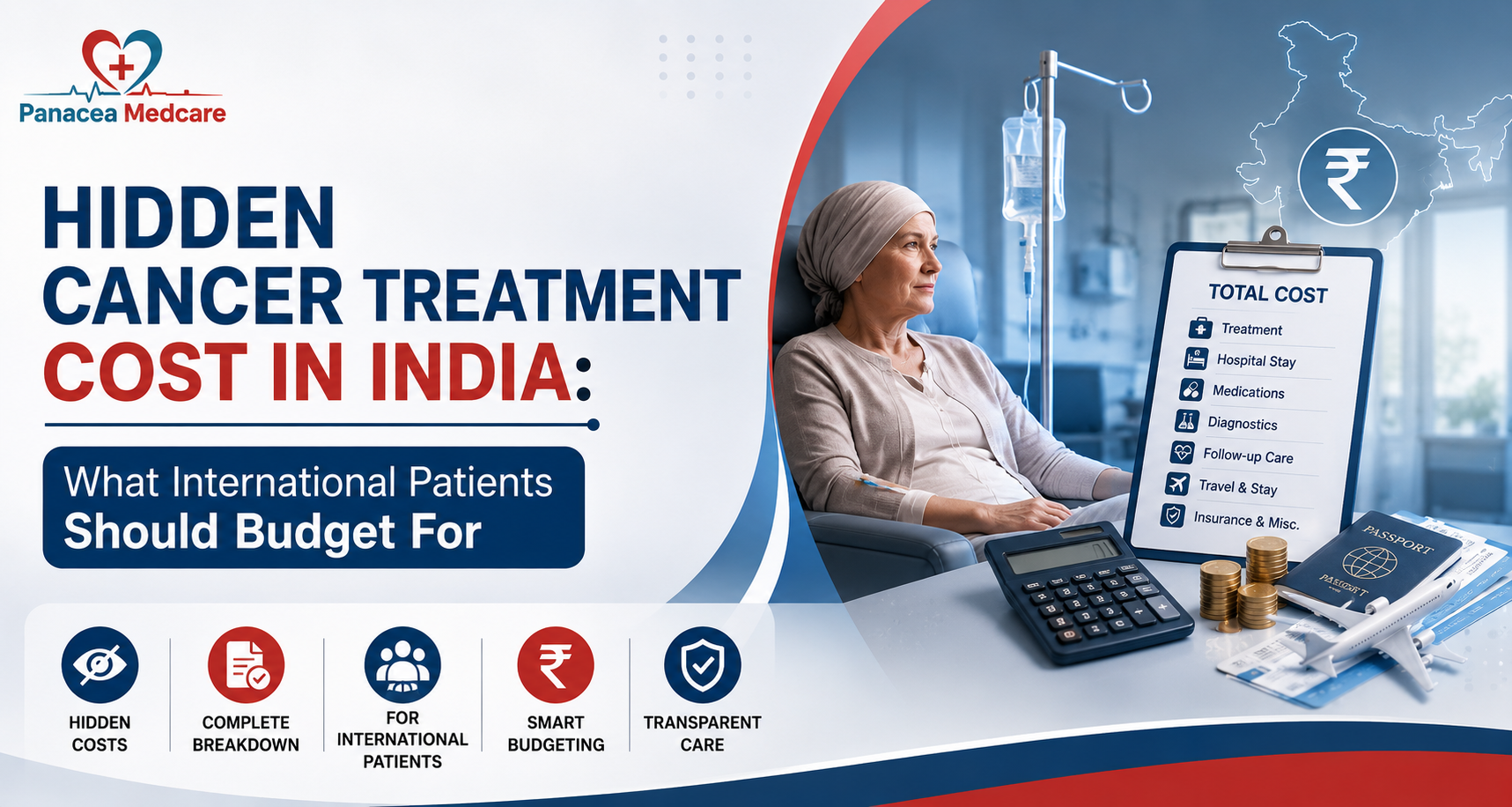
Treatment Quote vs Complete Cancer Treatment Budget
| Initial Treatment Quote May Include | Complete Patient Budget May Also Include |
| Surgery | Pre-treatment investigations |
| Chemotherapy | Pathology review |
| Radiation | Biomarker/genomic testing |
| Hospital stay | Supportive medicines |
| Doctor fees | Repeat imaging |
| Basic procedure charges | Extended hospital stay |
| Accommodation | |
| Flights and ticket changes | |
| Visa expenses | |
| Local transportation | |
| Attendant expenses | |
| Follow-up care |
How Much Should International Patients Budget for Cancer Treatment in India?
Estimates now suggest that a typical overall Cancer Treatment Cost in India varies between about 2.5 lakh and 25 lakh, or even higher, depending on the type of cancer, its stage, the type of treatment, the hospital, and the patient’s condition. A different 2026 study/analysis projects prices in the range of ₹5 lakh-25 lakh+, and new technologies can push prices upward.
It is a calculatedly wide range.
The budget of a patient who needs surgery and then chemotherapy is totally different than that of a patient who needs immunotherapy, a bone marrow transplant, or long-term multimodal treatment.
Rather than request an average Medical Treatment Cost in India, the international patients ought to request three figures:
1. Estimated Medical Treatment Cost
The expected hospital, doctor, procedure, medicine, and investigation expenses.
2. Estimated Medical Travel Cost
Flights, visas, accommodation, transportation, food, and attendant expenses.
3. Contingency Budget
Additional funds for extended stays, changed treatment plans, repeat investigations, or other medically necessary expenses.
This provides a far more realistic picture of the International Patient Treatment Cost India.
How to Avoid Unexpected Cancer Treatment Expenses
Patients cannot predict every medical expense, but they can significantly improve financial planning before travelling.
- Request an Itemized Estimate
- Share Complete Medical Records Before Travelling
- Ask About Additional Treatments
- Confirm Expected Stay in India
- Keep a Contingency Budget
- Understand Follow-Up Requirements
Final Thoughts
Cancer Treatment Cost in India are not just the amount for chemotherapy, surgery, radiation, or what’s listed on the hospital’s first bill. International patients may incur additional costs for diagnostics, pathology, biomarker testing, supportive drugs, repeat radiography, accommodation, flights, medical visas, transportation, attendants, long-term stay, and follow-up services.
This is not to say that the cost of treatment is unplannable. This is to imply that they require proper planning.
International patients need to have a clear understanding of the proposed treatment, anticipated medical costs, the likely length of stay in India, non-medical costs, and other requirements before they book flights.
Panacea Medcare helps foreign patients find this information before and during their medical trip, including specialist consultations and hospital choice, cost estimates for treatment, travel services, accommodation, and follow-up services.
Considering cancer treatment in India? Review your medical records with Panacea Medcare to get a tailored medical opinion and medication cost guide before traveling.