Blood Cancer Risk: Risk Factors Associated with the Treatment
Blood cancers affect blood cell production and function and include diseases such as leukemia, lymphoma, and multiple myeloma. One of the most common questions patients ask is whether lifestyle, genetics, previous medical treatment, or environmental exposure can increase blood cancer risk
It has hardly any single cause. Other risk factors like age, hereditary conditions, etc cannot be remedied, whereas other factors like smoking or some work-related exposures can be avoided. Excessive chemotherapy or radiation may also pose a minor threat to the development of some blood cancers in the future.
In the case of patients diagnosed with blood cancer and seeking fertile ground to pursue treatment in India, knowledge of not only the disease-associated risks but also the complications associated with the treatment would enable them to ask their questions and make better decisions about their health care.
What Is Blood Cancer Risk?
Blood cancer risk is a factor that is linked with a higher risk of getting blood, bone marrow, or lymphatic system-based cancers. Having one or more risk factors does not mean an individual will certainly develop cancer.
People with no known risk factors might also develop blood cancers. The National Cancer Institute stresses that risk factors are not always causal for cancer.
The three major groups include
- Leukaemia
- Lymphoma
- Multiple myeloma
Each has different biological characteristics and its own risk profile.
Key Risk Factors Associated with Blood Cancer
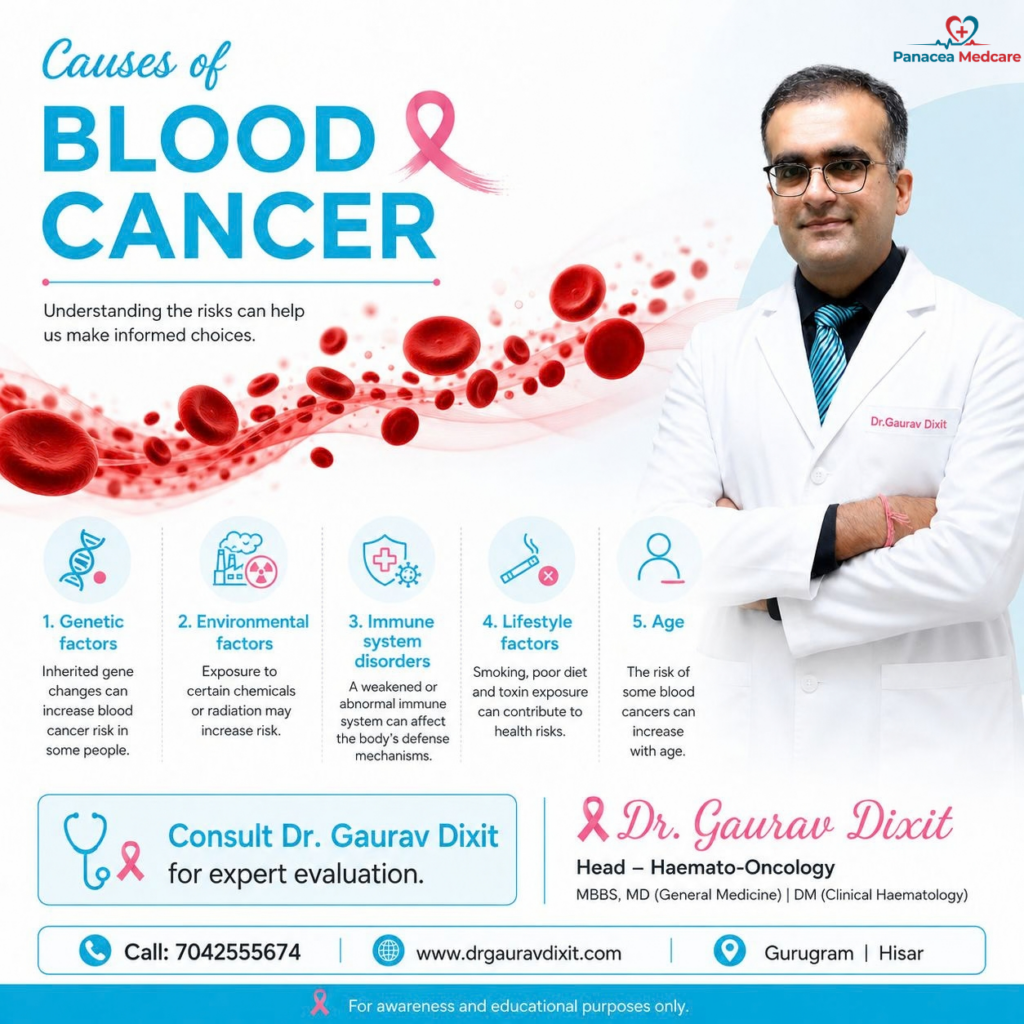
There is also a great difference between people when it comes to the likelihood of getting blood cancer. Among the factors that have been attributed to specific malignancies of the blood, as researchers have identified them, are age, genetics, environmental exposures, immune-system conditions, and the past treatment of cancer.
1. Age
Age is a significant risk factor for several blood cancers. Acute myeloid leukemia increases with age, whereas multiple myeloma is more prevalent in middle-aged and older adults. The distribution of Hodgkin lymphoma varies, with it being more widespread in early adulthood and later in life. Only age is not enough; it determines whether the individual is going to be affected by blood cancer.
2. Family History and Inherited Conditions
There are some incurable natural faults that can predispose individuals to hematological cancers. In certain lymphomas and leukemias, family history can also be pertinent. As an example, NCI cites parental or sibling history of having Hodgkin lymphoma as one of the factors that correspond to an increased risk of having Hodgkin lymphoma.
When clinically appropriate, patients with a strong family history can undergo specialist assessment.
3. Previous Chemotherapy or Radiation
Previous treatment of another cancer is one of the lesser-known blood cancer risk factors.
Some chemotherapy drugs and radiation may contribute to the subsequent occurrence of treatment-related myeloid malignancies, such as AML. NCI also enumerates prior chemotherapy or radiation as some of the known risk factors of adult ALL.
This does not imply that patients are not supposed to undergo medically necessary cancer treatment. Doctors weigh these rare long-term risks against the immediate benefits of treating the original cancer.
4. Exposure to Benzene and Certain Chemicals
Prolonged or excessive exposure to benzene is linked to leukemia as well as other blood diseases.
Benzene can be encountered through some industrial environments, gasoline fumes, and tobacco smoke. NCI specifically mentions exposure to benzene as one of the risk factors for leukemia.
Reducing avoidable exposure at work and to tobacco can hence diminish one of the risk factors which can be prevented.
5. Smoking
The Smoking is most commonly associated with lung cancer but also is capable of affecting the risk of some blood cancers.
Smoking is considered by NCI as one of the potential risk factors of AML. Benzene also is an important source of cigarette smoke.
Quitting smoking has health advantages far beyond blood cancer prevention.
6. Weakened Immune System and Certain Infections
Immune suppression or certain infections are related to some types of lymphoma.
In non-Hodgkin lymphoma, inherited immune conditions, autoimmune conditions, HIV/AIDS, and infection by certain organisms like the Epstein-Barr virus, HTLV-1, and Helicobacter pylori of the liver, among others, are identified as risk factors with respect to specific types of lymphoma.
These associations depend on the type of lymphoma and do not mean that all infected individuals will develop cancer.
How Blood Cancer Risk Differs by Cancer Type
Not every blood cancer shares the same risk profile. Patients should understand the specific diagnosis before making assumptions based on general information about blood malignancies.
Leukaemia Risk Factors
Some of the risk factors of leukemia may be aging, inherited factors, prior chemotherapy or radiation, smoking, exposure to benzene, and some underlying bone marrow diseases.
The prognosis of chemotherapy, targeted medicines, immunotherapy, or transplantation may be needed to help a patient of acute or chronic leukemia based on the subtype.
As far as international patients investigate leukemia treatment in India, proper classification and molecular testing is of high importance as the treatment of AML, ALL, CML, and CLL greatly differs.
Lymphoma Risk Factors
Lymphoma risk factors may include age, impaired immunity, autoimmune conditions, the type of infection, and family history. But Hodgkin lymphoma and non-Hodgkin lymphomas are biologically distinct diseases.
India offers lymphoma treatment, which may include a combination of chemotherapy, antibody therapy, radiation, stem cell transplantation, or CAR-T, depending on the lymphoma subtype and response to treatment.
Multiple Myeloma Risk Factors
Older age, male gender, a history of MGUS or plasmacytoma, and some radiation or chemical exposures were found by NCI as risk factors for multiple myeloma.
Treatment of multiple myeloma in India could have combinations of specific medicines, immunomodulatory drugs, steroids, chemotherapy, and autologous stem cell transplant, depending on the patient’s eligibility.
What Risks Are Associated with Blood Cancer Treatment?
Treatment can save or extend lives, but every therapy has potential complications. Risks depend on the treatment, its intensity, the patient’s health, and the specific blood cancer.
Chemotherapy
India extensively uses chemotherapy in the treatment of leukemia, lymphoma, and specific treatment pathways of myeloma.
Possible side effects include infection, low blood counts, fatigue, nausea, mouth problems, bleeding, and peripheral neuropathy, depending on the drugs used. Side effects vary considerably from person to person.
Bone Marrow Transplant
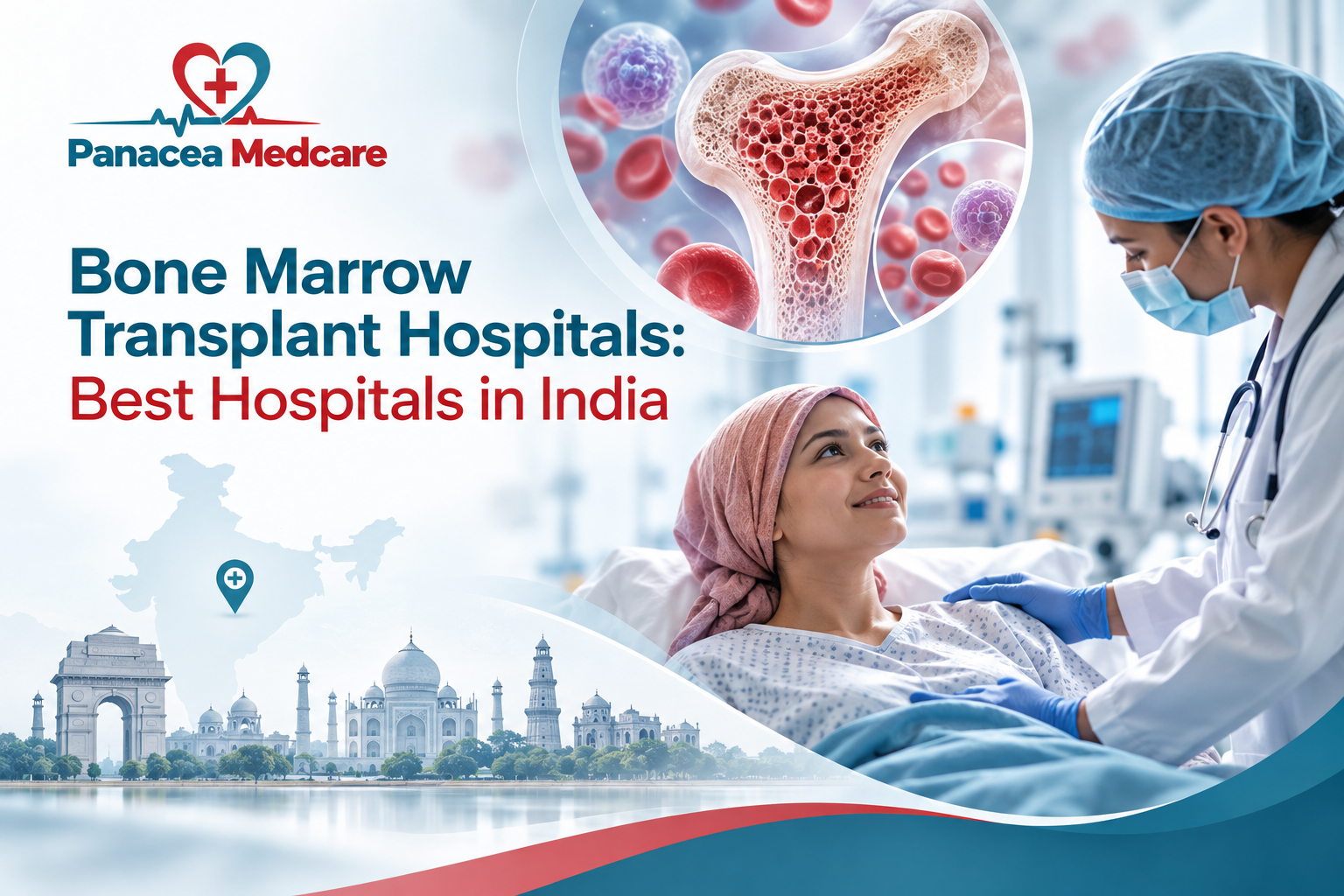
Bone marrow transplant in India can be considered for selected patients with leukemia, lymphoma, and other severe hematological conditions.
Pretransplantation (high-dose) therapy may enhance the risks of infections and bleeding. There is also a threat of graft-versus-host disease, where donor immune cells attack the patient’s tissues in allogeneic transplantation.
In the short term, some of the long-term complications may be infertility, organ damage, and secondary cancers.
CAR T-Cell Therapy
CAR T-cell therapy provided in India is also another form of treatment to various forms of relapsed or refractory blood cancers.
Cytokine release syndrome and neurological toxicity are important potential complications. Severe infections and longer-term suppression of certain normal B cells can occur.
CAR-T thus requires eligibility evaluation and treatment at adequately furnished centers.
Targeted and Immunotherapy Treatments
Newer immunotherapies and targeted therapies in India have increased the range of medications to treat blood cancer, but there are drug-specific risks associated with these medications.
During therapy, patients need monitoring to help the medical team detect toxicity, assess response to treatment, and adjust therapy as needed.
When Should Blood Cancer Symptoms Be Investigated?
Having risk factors does not mean someone should assume they have cancer. However, persistent unexplained symptoms deserve medical assessment.
Possible blood cancer symptoms can include:
- Unexplained fatigue
- Recurrent infections
- Persistent fever
- Easy bruising or bleeding
- Painless swollen lymph nodes
- Drenching night sweats
- Unexplained weight loss
- Bone pain in some conditions
For example, AML can cause fatigue, fever, infections, and abnormal bleeding, while Hodgkin lymphoma commonly presents with painless enlarged lymph nodes and may be associated with night sweats and unexplained weight loss.
Blood tests alone may not establish the diagnosis. Further testing can include bone marrow examination, flow cytometry, pathology, imaging, and molecular investigations.
Blood Cancer Treatment in India for International Patients
After being diagnosed with blood cancer, the treatment is applied depending on the specific subtype of cancer as opposed to just the label “blood cancer.”
Cancer patients visiting India for treatment should preferably forward pathology, bone marrow reports, flow cytometry, molecular results, PET-CT reports, and previous treatment history before travel.
How Panacea Medcare Supports Blood Cancer Patients
Panacea Medcare is a medical tourism facilitator in India that helps international patients arrange consultant meetings and manage the practical side of treatment.
Patients can remotely access their medical records to review them and decide whether to work with Panacea Medcare. After evaluating the case, Panacea may also help coordinate the right specialists and hospitals and provide indicative treatment estimates.
Under its International Patient Services in India, Panacea provides support such as medical visa assistance, appointment coordination, and hospital admission planning.
Accommodation support helps patients and attendants plan extended stays needed to complete chemotherapy or transplant pathways; once travel is confirmed, airport pickup and local transportation are available. Follow-up care may also be arranged with the treating medical team where the person is treated.
The qualified hematologists and oncologists will always have the final say on clinical decisions.
Conclusion
Knowing blood cancer risk entails the knowledge that there is no single factor that defines who is to get leukemia, lymphoma, or multiple myeloma. Age, genetics, immune system
Risk may be affected by conditions, some infections, environmental exposures, and past cancer treatments, but many patients do not have a specific cause of blood cancer.
In a person who is already diagnosed, the issue of the risk factors is less important than determining the specific type of blood cancer subtype and setting up a proper treatment pathway.
Panacea Medcare assists foreign patients seeking medical treatment in India by advising on specialists, choosing hospitals, planning treatment, and coordinating all-inclusive medical travel.
Pre-travel to India: medical reports will help you determine what you get to treat and will provide an indicative treatment plan fee for your medical report sent to Panacea Medcare with an indicative treatment plan.
Frequently Asked Questions
What increases blood cancer risk?
Blood cancer risk can be influenced by age, inherited conditions, immune dysfunction, previous chemotherapy or radiation, smoking, and certain chemical exposures. Risk factors vary considerably between leukemia, lymphoma, and multiple myeloma.
Can previous cancer treatment cause blood cancer?
Certain chemotherapy medicines and radiation can increase the later risk of treatment-related blood cancers, particularly some myeloid malignancies. However, these risks must be balanced against the benefits of treating the original cancer.
Does having a family history mean I will develop blood cancer?
No. Family history can increase susceptibility to some blood cancers, but most people with affected relatives do not necessarily develop the disease.
Can blood cancer be treated with bone marrow transplant?
Yes, stem cell or bone marrow transplantation can be used for selected leukemia, lymphoma and other blood disorders. Eligibility depends on disease type, treatment response, age, health, and donor factors.
Can international patients get blood cancer treatment in India?
Yes. International patients can share medical records before travel for specialist review and potential treatment planning involving chemotherapy, targeted therapy, BMT, CAR-T or other appropriate options.