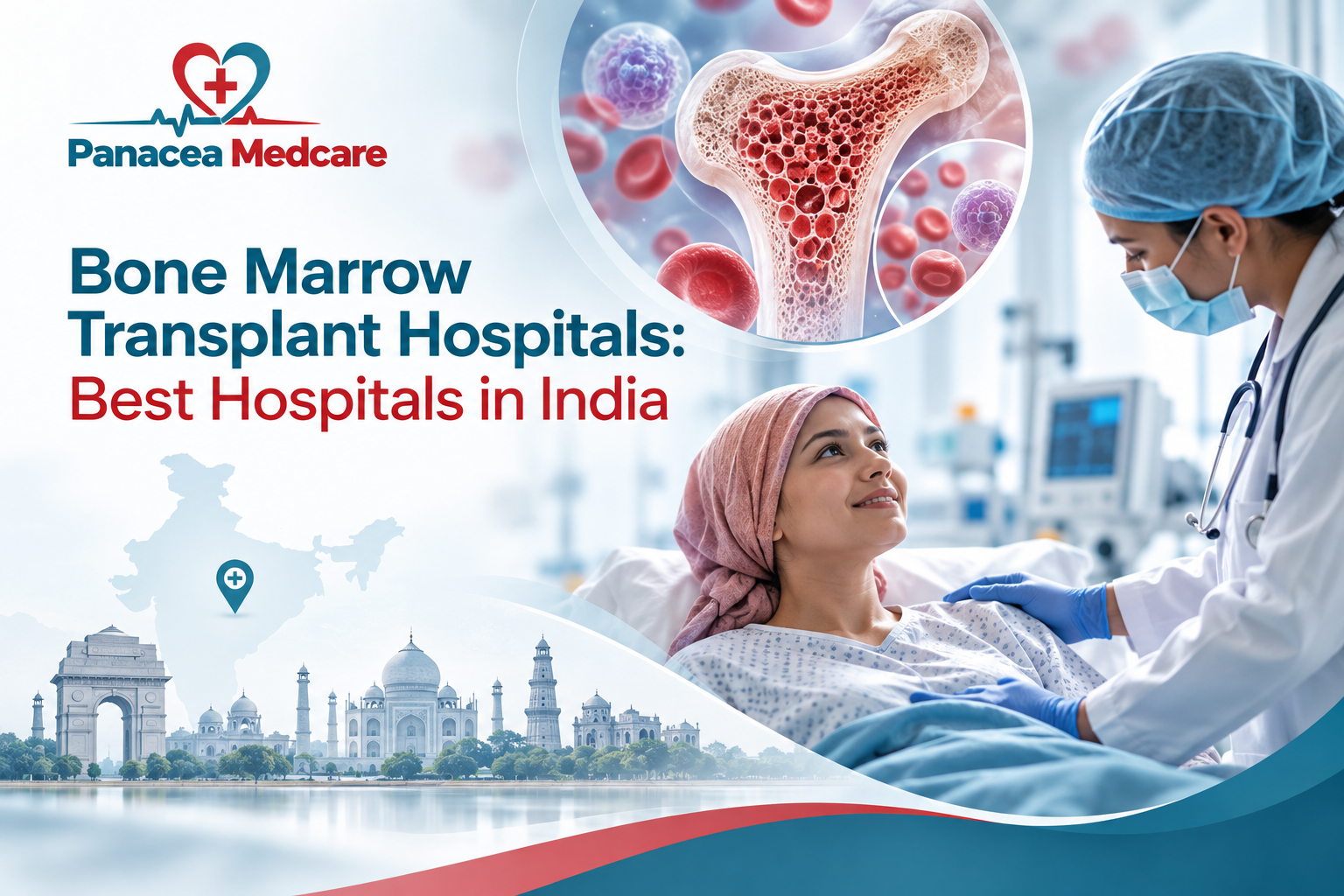
Bone Marrow Transplant Hospitals: Best Hospitals in India
One of the most important decisions patients with leukaemia, lymphoma, multiple myeloma, aplastic anemia, thalassemia, and other serious blood disorders will face is choosing among bone marrow transplant hospitals; it genuinely carries that weight. Far more than an experienced transplant physician goes into a bone marrow or stem cell transplant; specialised isolation rooms, infection-control protocols, HLA matching, blood-bank support, critical care, and long-term monitoring must also be in place.
Autologous, allogeneic, matched-donor, and haploidentical transplantation: India has established BMT treatment offering all of these for eligible patients. For international patients considering bone marrow transplant in India, hospital selection should hinge on the diagnosis, transplant type, donor availability, pediatric or adult requirements, and the hemato-oncology team’s experience.
Appropriate hospitals, specialists, expected treatment plans, and costs: Panacea Medcare helps international patients compare these factors before travelling for medical treatment in India.
What Makes a Good Bone Marrow Transplant Hospital?
The biggest hospitals aren’t automatically the best bone marrow transplant hospitals in India. BMT patients have temporarily weakened immune systems and may develop infections, graft-versus-host disease, or other complications, so specialised infrastructure and multidisciplinary support are essential, not optional.
Experienced hematologists like Dr. Aarushi Agarwal at Panacea Medcare, transplant physicians, trained BMT nursing teams, dedicated transplant rooms, infection-control systems, an advanced blood bank, intensive-care backup, and a strong BMT centre need all of this in place. Whether the centre routinely performs the specific transplant actually needed is also worth checking directly.
Medical oncology, pathology, molecular diagnostics, and transplant care within the same hospital: having access to all of this under one roof can make complex treatment a lot easier to coordinate for someone seeking blood cancer treatment in India.
Best Bone Marrow Transplant Hospitals in India
No single hospital is “best” for every patient, that’s simply not how this works. Diagnosis, age, transplant type, donor situation, previous treatment, and overall health, the right centre depends on all of these together. The following leading BMT Hospitals in India are part of Panacea Medcare’s hospital network and offer established bone marrow transplant services.
| Hospital | Location | BMT Highlights |
| BLK-Max Super Speciality Hospital | New Delhi | Large BMT program, adult and pediatric hematology |
| Medanta, The Medicity | Gurugram | Autologous, allogeneic, and haploidentical transplantation |
| Fortis Memorial Research Institute | Gurugram | Adult and pediatric BMT program |
| Indraprastha Apollo Hospital | New Delhi | Dedicated BMT specialists and transplant program |
| Max Super Speciality Hospital, Saket | New Delhi | Hematology, hemato-oncology, and BMT services |
| Artemis Hospital | Gurugram | Dedicated BMT and hemato-oncology team |
| Apollo Hospital, Navi Mumbai | Mumbai | BMT and hematology services |
| Yatharth Super Speciality Hospital | Greater Noida | Cancer care and bone marrow transplantation |
BLK-Max Super Speciality Hospital, New Delhi
Among the most established bone marrow transplant hospitals in Delhi NCR, BLK-Max holds a solid reputation. Panacea’s hospital profile describes its BMT centre as one of the largest in North India, performing more than 100 transplants annually, with real experience in matched unrelated donor transplantation.
For patients requiring leukemia treatment in India, lymphoma care, and other blood cancer pathways, this hospital is worth considering where transplantation has been recommended after specialist assessment.
Medanta, The Medicity, Gurugram
Malignant and non-malignant blood disorders, including leukemia, lymphoma, multiple myeloma, aplastic anaemia, and thalassemia, Medanta treats all of these through a dedicated Bone Marrow Transplant Division.
With autologous and allogeneic transplants, related and unrelated donor transplantation, and expertise in haploidentical procedures, its program offers a full range of options. Dedicated isolation facilities and HLA-matching capabilities back up transplant planning and recovery throughout.
With hematopoietic and transplant specialists in the same multidisciplinary setting, patients considering lymphoma treatment in India can access both here.
Fortis Memorial Research Institute, Gurugram
Fortis Gurugram runs a comprehensive adult and pediatric bone marrow transplant program. According to Fortis, the centre has performed more than 2,500 BMT procedures, with autologous, allogeneic, and haploidentical transplantation all available.
The program treats blood cancers, aplastic anaemia, thalassaemia, sickle cell disease, and selected inherited disorders.
Induction therapy, stem-cell collection, and post-transplant monitoring are available for patients requiring multiple myeloma treatment in India, transplantation may be just one part of a broader treatment plan involving all of this.
Indraprastha Apollo Hospital, New Delhi
Indraprastha Apollo runs a dedicated bone marrow transplant service, backed by BMT specialists and multidisciplinary hospital infrastructure.
Panacea’s hospital profile lists a dedicated BMT department, while Apollo itself describes stem-cell transplantation as an established treatment for blood cancers and several inherited blood disorders.
High-risk leukaemia, thalassaemia, sickle cell disease, immune-deficiency disorders, its paediatric programme also provides transplant care for conditions like these.
Max Super Speciality Hospital, Saket
Haematology, haemato-oncology, and bone marrow transplantation, with adult and paediatric expertise behind all three, that’s what Max Saket provides.
Experienced transplant specialists, personalised care, and stringent infection-control protocols, the hospital highlights all of these as core parts of its BMT program.
Access to broader oncology and transplant specialties within the same hospital network, Max also provides this for international patients evaluating stem cell transplant hospitals in India.
Artemis Hospital, Gurugram
Haematology, oncology, bone marrow transplantation, including paediatric haematology, Artemis has a dedicated team covering all of this. Intensive care, diagnostic imaging, laboratory facilities, procedure areas, inpatient support, its BMT infrastructure includes each of these.
Multidisciplinary hematology evaluation before determining whether transplantation is appropriate, that’s exactly what this hospital may suit for patients whose case requires it.
Apollo Hospital, Navi Mumbai
For patients seeking transplantation outside Delhi NCR, Apollo Navi Mumbai sits as another option within Panacea Medcare’s hospital network.
Dedicated to bone marrow transplant and hematopoietic oncology departments, alongside medical oncology, critical care, and other supporting specialties, Panacea’s hospital directory lists all of this at Apollo Navi Mumbai.
When patients require chemotherapy before transplant or additional oncology management, this multidisciplinary setup becomes genuinely relevant for cancer treatment in India.
Yatharth Super Speciality Hospital, Greater Noida
Cancer care and bone marrow transplantation within a 400-bed tertiary-care facility, that’s what Yatharth Greater Noida provides. Critical-care beds, blood-bank services, diagnostic facilities, and international-patient support, its infrastructure includes all of this.
Specialist experience, required transplant type, and expected post-transplant monitoring factors like these should get evaluated before choosing a centre, for patients comparing a bone marrow transplant hospital in India.
How Should International Patients Choose a BMT Hospital?
Whether transplantation’s actually recommended, and what type is required, international patients should confirm both first. An autologous transplant uses the patient’s own stem cells, while an allogeneic transplant requires donor stem cells instead. Haploidentical or unrelated-donor transplantation may be required for some patients too.
Specialist review of diagnosis, disease status, previous chemotherapy, HLA reports, and donor information, that’s what the choice of BMT Treatment in India should actually follow.
Suitable BMT specialists and hospitals according to the patient’s medical requirements, not a facility picked solely for its brand name, Panacea Medcare can help compare exactly this through Doctor and Hospital Matching.
How Much Does Bone Marrow Transplant Cost in India?
Around ₹15 lakh, that’s generally where the Bone Marrow Transplant Cost in India starts in 2026, and it can exceed ₹35-40 lakh for complex donor-based transplants. The type of transplant, underlying disease, donor matching, hospital stay, and complications, the final cost depends primarily on all of these.
| Type of Bone Marrow Transplant | Indicative Cost in India |
| Autologous Bone Marrow Transplant | ₹15-20 lakh |
| Allogeneic Bone Marrow Transplant | ₹20-35 lakh |
| Haploidentical Bone Marrow Transplant | ₹35 lakh+ |
| Matched Unrelated Donor BMT | ₹25-40 lakh+ |
| BMT for Thalassaemia | ₹15-30 lakh |
Conclusion
Much more than online rankings should shape the choice among Bone Marrow Transplant Hospitals. The patient’s blood disorder, transplant type, donor availability, specialist experience, infection-control infrastructure, and post-transplant support all influence which hospital is appropriate.
Established BMT programs across Delhi NCR, Mumbai, and other major healthcare centres in India offer all of this for both adult and paediatric patients.
BMT specialists, hospitals, treatment plans, and indicative costs: Panacea Medcare helps international patients compare all of these while coordinating the complete Medical Tourism India journey.
Share medical reports, bone marrow findings, and donor information with Panacea Medcare to identify suitable BMT hospitals and receive a personalised treatment plan before travelling to India.
Frequently Asked Questions
Which are the best bone marrow transplant hospitals in India?
BLK-Max, Medanta, Fortis Gurugram, Indraprastha Apollo, Max Saket, Artemis, Apollo Navi Mumbai, and Yatharth lead the options. The right hospital still depends on the patient’s diagnosis and transplant requirements, though.
Which diseases can require a bone marrow transplant?
Leukaemia, lymphoma, multiple myeloma, aplastic anaemia, thalassaemia, sickle cell disease, immune deficiencies, and other blood or inherited disorders. BMT may be considered for selected patients with any of these.
What types of bone marrow transplant are available in India?
Autologous, allogeneic, matched-related, matched-unrelated, and haploidentical transplantation: Indian BMT centres offer all of these. The disease, donor availability, and specialist assessment shape which approach actually fits.
How do international patients select a BMT hospital?
Diagnosis, bone marrow reports, treatment history, and available HLA information should get sent for specialist review. The hospital can then get selected according to transplant type and required expertise.
Can Panacea Medcare arrange the complete BMT journey?
Yes. Specialist review, hospital selection, indicative treatment estimates, visa support, airport pickup, accommodation, admission, and follow-up assistance, Panacea Medcare can coordinate all of this for international patients.