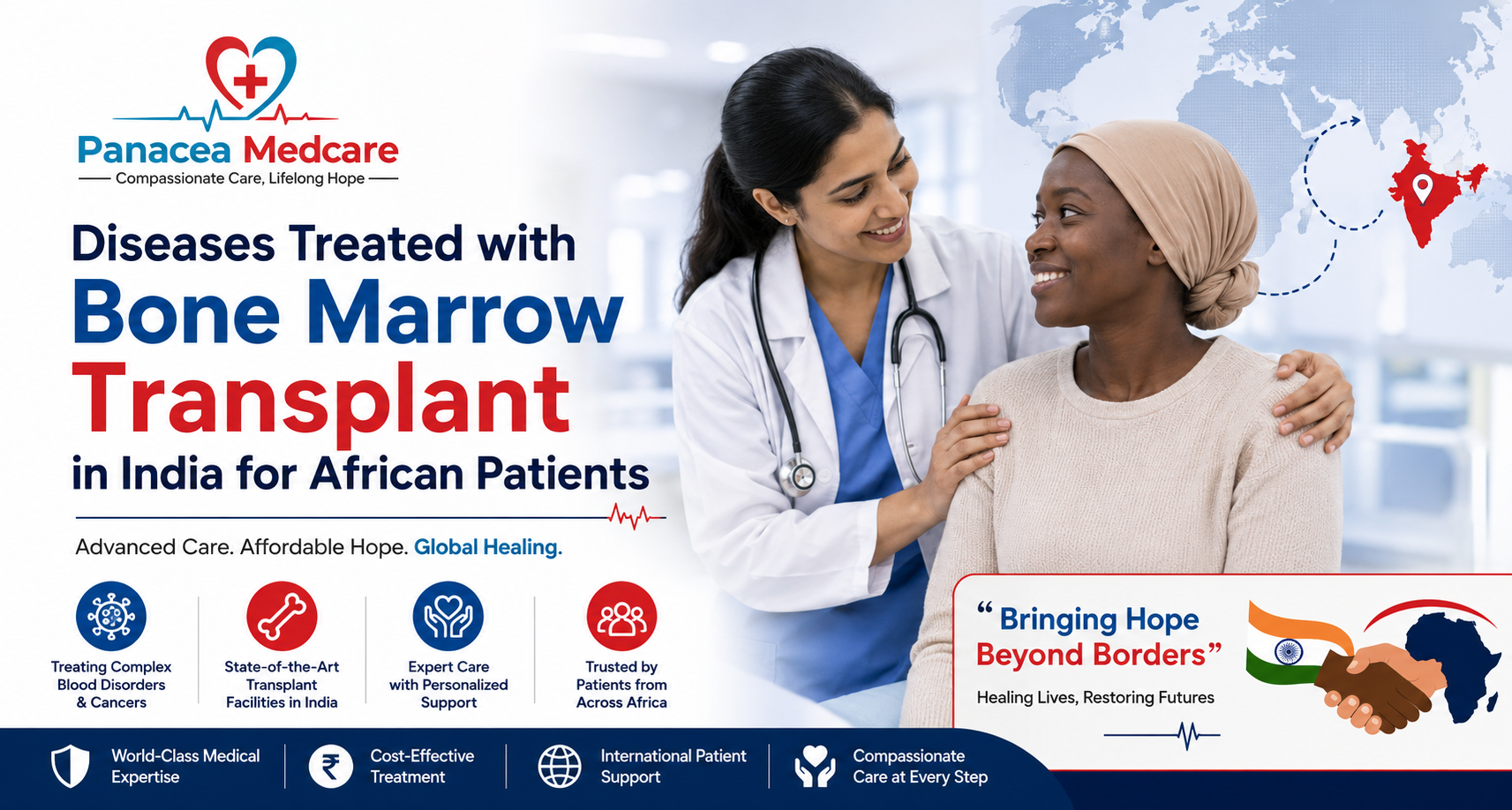
Diseases Treated with Bone Marrow Transplant in India for African Patients
Are you in search of safe treatment options of leukemia, sickle cell disease, lymphoma, thalassemia, and other serious blood disorders? Have you been encouraged by the family to consider the bone marrow transplant and feel afraid to get the treatment, cost, recovery or the availability of highly qualified specialists?
To most families in Africa, control of the blood cancer and serious blood disorder may turn out to be emotionally and economically daunting. In others, even sophisticated transplant infrastructure, donor matching or specialized hematology services may not necessarily be conveniently available at the local level. This is among the largest reasons why more and more families are considering Bone Marrow Transplant in India on behalf of African Patients.
Due to trained hematologists, advanced transplant units, sophisticated infection-control systems, and far cheaper treatment procedures than in most Western nations, India has become one of the most popular places to undergo bone marrow transplant treatment.
Patients in Nigeria, Kenya, Ghana, Uganda, Tanzania and some countries in Africa today travel to India to receive high-level care on blood disorders and stem cell transplant care.
This guide discusses the top diseases that are cured by the use of bone marrow transplant, the treatment process of transplant, and the reasons why India is becoming an effective choice among African patients seeking high-quality treatment by hematologists.
What Is Bone Marrow Transplant?
Bone Marrow Transplant (BMT) or stem cell transplant is a medical procedure that is specifically designed to replace damaged or diseased bone marrow with healthy stem cells.
Bone marrow is responsible for producing:
- red blood cells
- white blood cells
- platelets
In case of bone marrow damage due to cancer, genetic disorders or blood diseases, the body might be unable to produce healthy blood cells in the appropriate way anymore.
A bone marrow transplant is used to restore normal blood cell production and enhance the immune system.
Advanced transplant expertise and low cost of treatment has significantly fueled the increased demand of Bone Marrow Transplant in India, in regards to African Patients.
Types of Bone Marrow Transplant
Various diseases might necessitate varying approaches to transplant.
Autologous Bone Marrow Transplant
The healthy stem cells of the patient are taken and reintroduced when subjected to intense treatment.
Allogeneic Bone Marrow Transplant
The donor provides the stem cells that have a tissue compatibility.
Haploidentical Bone Marrow Transplant
It contains a partially matched donor, usually a family member.
Umbilical Cord Blood Transplant
The stem cells are obtained as preserved umbilical cord blood.
Leukemia Treated with Bone Marrow Transplant
One of the most frequent conditions in terms of the need of transplant treatment is leukemia.
Acute Lymphoblastic Leukemia (ALL)
This is an aggressive blood cancer that targets the white blood cells and in most of the high risk or recurring cases it may need a transplant.
Acute Myeloid Leukemia (AML)
AML develops quickly, and could involve bone marrow transplant following chemotherapy to increase the chances of survival in the long term.
Chronic Leukemia
Transplant may also be needed in some chronic cases of leukemias where other modes of therapy become less effective.
The Bone Marrow Transplant in India for African Patients has made India very reliable in the management of leukemia due to the advanced hematology care systems.
Lymphoma Treated with Bone Marrow Transplant
Lymphoma involves the lymph system and the immune cells.
Hodgkin Lymphoma
Stem cell transplant may be needed in patients with relapsed or resistant Hodgkin lymphoma.
Non-Hodgkin Lymphoma
The severe cases of aggressive lymphoma may demand more complex transplant therapy to contain the disease.
Bone marrow transplant can enhance the remission rates and survival.
Multiple Myeloma Treatment Through Bone Marrow Transplant
Multiple myeloma is a cancer of the plasma cells within bone marrow.
To assist in managing and enhancing disease outcomes and survival, autologous bone marrow transplant is often performed following chemotherapy.
Numerous foreign patients prefer India due to the fact that the highly-developed treatment of myeloma is still much cheaper there than in most of the countries.
Aplastic Anemia Treated with Bone Marrow Transplant
Aplastic anemia is the development of bone marrow to produce sufficient healthy blood cells.
This situation can be fatal as the body is unable to adequately combat infections or as well as regulate bleeding.
Bone marrow transplant can be regarded as one of the most powerful long-term treatments of severe aplastic anemia.
Thalassemia Treatment Through Bone Marrow Transplant
Thalassemia is a genetic blood disorder which operates on the production of hemoglobin.
In severe cases of thalassemia, children may have to undergo blood transfusion throughout their lives in case there may not be a cure.
Bone marrow transplant can be one of the possible curative treatment options of selected patients.
This is among the biggest reasons families are interested in taking Bone Marrow Transplant in India in order to treat African Patients with Pediatric blood disorders.
Sickle Cell Disease Treated with Bone Marrow Transplant
Sickle cell disease is extremely pertinent in most African nations.
The disease is an illness of red blood cells and can result in:
- severe pain episodes
- infections
- organ damage
- anemia
- poor quality of life
Why Bone Marrow Transplant Is Important
In selected patients, a long-term curative treatment option could be offered in terms of bone marrow transplant.
Pediatric Sickle Cell Treatment
Children who are diagnosed early can have better outcomes of transplant.
India is gradually gaining prominence in regard to high-level care of sickle cell disease using Bone Marrow Transplant in India for African Patients.
Myelodysplastic Syndromes (MDS)
The bone marrow contains blood-forming stem cells that are impacted by MDS.
The disease can evolve into leukemia in the long term.
In serious or risky situations, bone marrow transplant might be prescribed.
Immune Deficiency Disorders Treated with Bone Marrow Transplant
Certain hereditary immune diseases do not allow the body to combat infections normally.
Stem cell transplant can assist in restoring the functionality of the immune system and enhance survival.
Relapsed or Resistant Blood Cancers
Certain blood cancers are relapsing despite chemotherapy or targeted therapy.
Bone marrow transplant can be ordered in case of:
- cancer relapses
- chemotherapy becomes ineffective
- risk of disease is high
Most of the complicated and relapsed cases of blood cancer are treated in advanced transplant units in India.
Why African Patients Choose India for Bone Marrow Transplant
India has emerged as one of the most reliable places of treatment of advanced blood disorders.
Affordable Treatment Costs
In India, the treatment is much cheaper than in numerous healthcare systems all around the world.
Experienced Hematology Specialists
Hematologists and transplant specialists in India are well-versed with the management of complicated blood disorders day by day.
Advanced Bone Marrow Transplant Units
The current transplant centers are equipped with isolation facilities and infection control infrastructures.
Better Donor Matching Systems
State-of-the-art donor testing enhances transplant planning.
International Patient Support
Most centers provide care to patients with:
- treatment coordination
- travel assistance
- accommodation support
- recovery planning
Such benefits keep pushing the demand of Bone Marrow Transplant in India among African Patients.
Cost of Bone Marrow Transplant in India for African Patients
Cost of treatment varies according to the type of disease, complexity of the transplant, the requirements of the donors and the duration to recover.
Autologous Transplant Cost
Usually ranges between:
USD 12,000 to USD 25,000
Allogeneic Transplant Cost
Usually ranges between:
USD 18,000 to USD 40,000
Haploidentical Transplant Cost
Usually ranges between:
USD 20,000 to USD 45,000
India is also much cheaper as compared to most other healthcare systems in the world.
Recovery After Bone Marrow Transplant
The element of recovery is most important to the success of transplants.
Hospital Recovery
Patients are closely monitored post-transplant.
Timeline: 3 to 6 weeks
Immune Recovery
The immune system slowly recovers following treatment.
Timeline: Several months
Follow-Up Monitoring
Periodic blood tests and specialist consultations will not lose their top position.
Long-Term Recovery
Recovery is based on the type of disease, compatibility of the donors and the health condition of the patient.
Risks Associated with Bone Marrow Transplant
Transplant procedures are risky like all other advanced treatments.
Infection Risk
Post-transplant, the immune system is weak.
Graft-versus-Host Disease (GVHD)
In certain allogeneic transplants, the donor cells can make an attack on the tissues of the patient.
Graft Failure
Sometimes transplanted stem cells may not grow properly.
Disease Relapse
Some cancers may return after treatment.
The management of these complications is done with the help of experienced transplant teams.
How to Improve Bone Marrow Transplant Success
A Bone Marrow Transplant (BMT) success is determined by a number of medical and recovery-related factors such as the stage of disease, compatibility of the donor, infection control, expertise of the hospital and after-transplant care of the patient. Although highly developed medical devices and qualified specialists of transplantation are essential factors, patients and relatives also can significantly contribute to the enhancement of the recovery rate.
Families that consider Bone Marrow Transplant in India to treat African Patients must learn that the success of the transplant does not solely focus on the procedure itself. Post-transplant care and long term recovery management are also important.
Choose Experienced Bone Marrow Transplant Specialists
Accomplished hematologists and transplant teams assist in enhancing the treatment plans, donor matching, infection control, and long-term outcome to recovery after undergoing lifetime complex blood disorders.
Select Advanced Transplant Centers
Modern Bone Marrow Transplant hospitals, infection control apparatus, ICU support, and special recovery facilities have in general more powerful transplant administration.
Ensure Proper Donor Matching
Favorable donor match enhances the outcome after transplant and minimizes complications like graft rejection or Graft-versus-Host Disease (GVHD).
Start Treatment at the Right Time
Timely transplant planning and early diagnosis usually enhances chances of survival and long term treatment of blood cancer and genetic blood disorders.
Follow Infection-Control Measures Strictly
The post transplant immune system is weak. It is important that patients take no risks of being infected, stay hygienic and adhere to protective recovery rules.
Maintain Proper Nutrition
Balanced nutrition can reinforce the immune system, increase the rate of recovery, and promote a healthy regeneration of blood cells in the post-transplant period.
Take Medications Correctly
The use of post-transplant drugs will prevent infections, control immune response and decrease complications. The lack of medications can have an adverse influence on recovery.
Attend Regular Follow-Up Visits
Repeat blood tests, follow-up, and special check-ups are a tool to identify possible complications early and enhance long-term transplant management.
Avoid Crowded and High-Risk Environments
In the early restoration of immunity, patients who have undergone transplant must stay out of crowded places, prevent infections and avoid unnecessary travel.
Maintain Emotional and Mental Support
The process of bone marrow transplant may be tough physically and emotionally. With the assistance of a well-developed family support and appropriate counseling, patients can heal more assuredly.
Follow Long-Term Recovery Guidance
The recovery of the transplant can take several months. Monitoring, nutritional care and specialist follow-up is advised to be continued by patients even after they get home.
Best Doctors for BMT Treatment in India for African Patients
The selection of the appropriate transplant specialist is among one of the most crucial decisions that families should make to receive advanced care in the field of hematology in foreign countries. Successful Bone marrow transplant needs experienced doctors and well-developed transplant guidelines, knowledge in infection control, and long-term patient care.
African patients will have an opportunity to meet knowledgeable hematologists and Bone Marrow Transplant specialists in India and plan their treatment accordingly and receive advanced treatment with Panacea Medcare.
Dr. Shishir Seth
Dr. Shishir Seth is a Senior Hemato-Oncologist and Bone Marrow Transplant consultant with Apollo Hospitals, Delhi. He has over 20 years of experience in hematology and transplant care with expertise in leukemia, lymphoma, myelodysplastic syndromes, stem cell transplantation, and blood disorders.
He has a reputation of handling complicated blood cancer patients as well as their elaborate transplant surgeries with individualized treatment regimens and contemporary hematology care infrastructures.
Dr. Gaurav Kharya
View Doctor Profile
Dr. Gaurav Kharya is a Pediatric Hematologist and Bone Marrow Transplant specialist in Apollo Hospitals, Delhi with worldwide recognition. He is more famous in the pediatric bone marrow transplant, treatment of sickle cell disease, treatment of thalassemia, treatment of aplastic anemia, and treatment of alternate donor transplants.
Dr. Kharya is highly qualified with a long history of pediatric and complex transplant cases and a well-known expertise in transplant protocols and sickle cell disease transplant in foreign clients.
How Panacea Medcare Helps African Patients
The families can be overwhelmed by planning advanced treatment of transplant abroad.
Panacea Medcare aids African patients in meeting reputable hematologists and advanced transplant centers in India, to arrange a personalized treatment plan and medical travel.
Support includes:
- specialist consultations
- hospital coordination
- cost estimates
- visa guidance
- travel support
- accommodation assistance
- recovery planning
This renders Bone Marrow Transplant in India to African patients more affordable and streamlined to families who have turned to the Bone Marrow Transplant abroad in search of the advanced treatment.
Conclusion
Transplantation of bone marrow has revolutionized the management of severe blood cancer, genetic blood diseases, and immune diseases. It provides hope to many patients of long-term recovery and enhanced quality of life.
The increased demand of Bone Marrow Transplant in India among African Patients is clear evidence of why India has been one of the most reliable countries when it comes to the provision of advanced hematology, low cost transplantation and the support of an experienced specialist.
India has superior transplant experience in leukemia and lymphoma, sickle cell disease, thalassemia and aplastic anemia with cost of treatment being much lower than most of the other international health care systems.
We provide African patients with access to reputable transplant providers and advanced care facilities in India with full support during the medical process at Panacea Medcare.
Consultation, treatment coordination, travel support and recovery advice are some of the areas Panacea Medcare focuses on to enhance advanced bone marrow treatment by making it more accessible and affordable to international patients in a more professional manner.